
Sustainable Architecture
Sustainable architecture, isan architectural practice focused on designing buildings that have minimalenvironmental impact, promote energy efficiency, and provide a healthy livingenvironment. It emphasizes the responsible use of resources throughout thelifespan of a building, from its design and construction to its operation andeventual demolition.
Core components explainedfurther:
1.Renewable Energy Integration: Sustainable buildings often incorporate renewable energysources like solar, wind, or geothermal energy. This can significantly reducedependency on non-renewable energy and decrease carbon emissions.
2.Efficient Use of Resources:This includes designing buildings to use less water, energy, and materials.Techniques might include high-efficiency heating and cooling systems, LEDlighting, and water-saving plumbing fixtures.
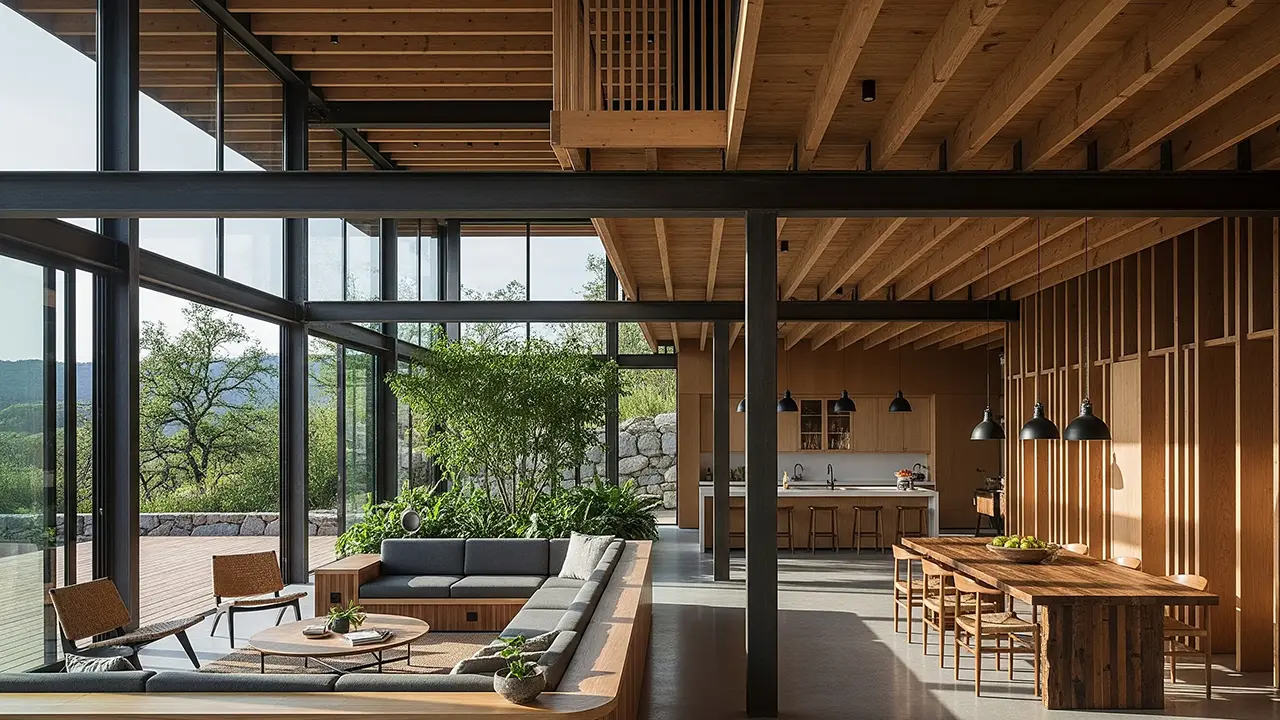
3.Sustainable Building Materials: Architects choose materials based on sustainability criteriasuch as durability, recyclability, and low environmental impact. Examplesinclude using reclaimed wood, recycled glass and plastics, and locally sourcedmaterials to reduce transportation impacts.
4.Design for Reduced Environmental Impact: Sustainable architecture seeks to minimize the impacton the site’s natural features and biodiversity. This can involve preservingexisting landscaping, restoring damaged ecosystems, and using non-invasiveplants.
5.Indoor Environmental Quality Improvement: This aspect focuses on creating a healthy indoor environmentby using materials that emit minimal pollutants, maximizing natural daylight,and enabling adequate ventilation. Good indoor environmental quality is crucialfor occupants’ health and well-being.
6.Adaptability and Durability:Designing buildings to be adaptable to different uses and capable ofwithstanding environmental changes reduces the need for futureresource-intensive renovations or reconstructions. By applying theseprinciples, sustainable architecture aims not only to reduce the carbonfootprint and environmental impact of building projects but also to createaesthetically pleasing and livable spaces that enhance occupant satisfactionand health.