Contextualizing Concept
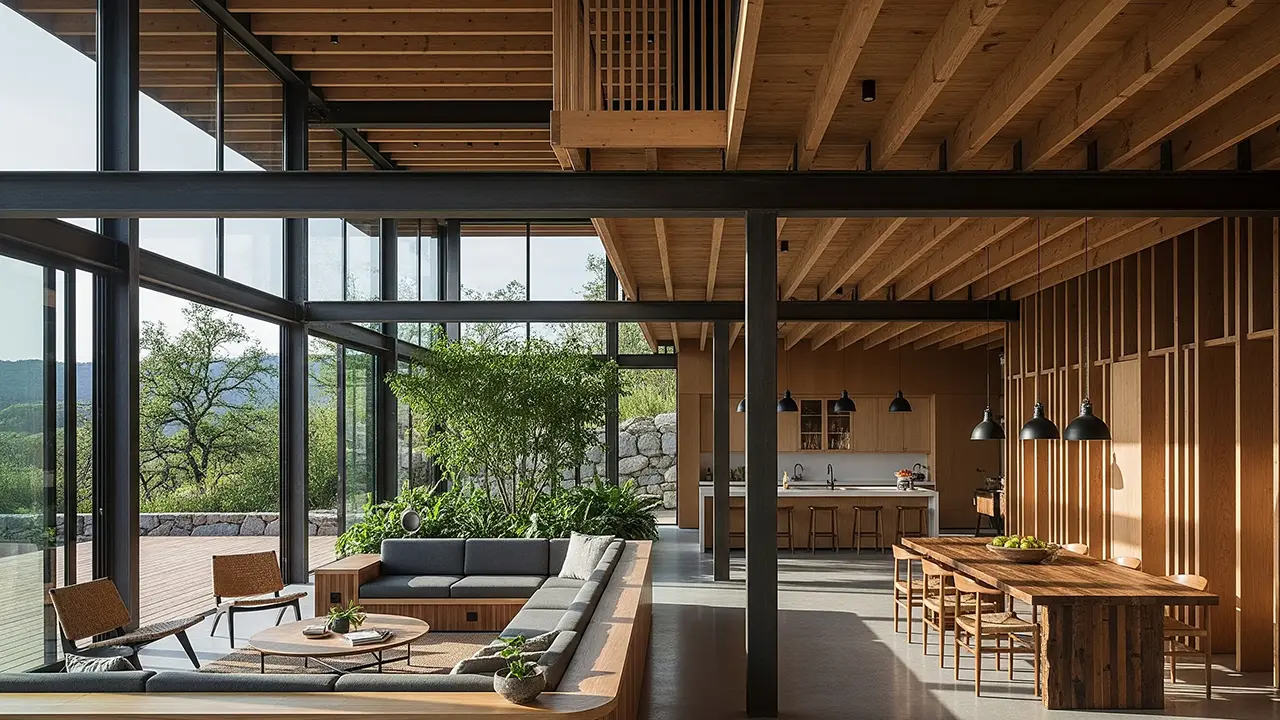
Contextualizing concept refers to designing a building or space based on—and responding to—existing data, particularly its history, memory, and contextual elements. Here, context includes the physical environment, cultural setting, historical values, and even social dynamics. The main goal is for the architectural design to establish a harmonious unity with its surroundings, enhance the existing condition, and reflect the location’s unique characteristics. In this approach, the integration of local materials, urban fabric, or landscape plays a significant role.
Traditional Material Usage
For instance, in a historic neighborhood dominated by red brick, reusing red bricks in a newly designed building becomes a powerful tool for grounding the concept in context. The architect creates a modern design, but incorporates historical materials and stylistic cues from the surroundings so that the building feels like a natural part of the neighborhood.
Adaptive Reuse
Another approach might involve converting a century-old warehouse into modern office spaces. In such a project, the concept responds to contemporary needs while preserving original elements such as metal beams, vaulted ceilings, or brick walls that define the industrial identity. This method revitalizes the space without erasing its historical traces. A similar example is GAD PARK’s conversion of a single‑story parking garage into offices: the structural features of the original building were preserved, and new solutions for modern functions were developed. The garage’s structural elements and design language became integral to the transformation, building a strong bridge between the building’s memory and its new functional needs.
Examples of Contextualizing Concept
- St. Pancras Renaissance Hotel, London
The restoration and extension of this iconic Gothic Revival hotel include contemporary interventions that harmonize with the original style. New elements are designed to align with original materials and patterns, preserving the historical integrity. - High Line, New York City
The transformation of an elevated railway line into a linear park respects the industrial history of the Meatpacking District and emphasizes local vegetation and open spaces. This preserves urban memory while creating a modern public space. - Louvre Pyramid, Paris
I.M. Pei’s glass and metal pyramid forms a deliberate contrast with the classic architecture of the Louvre Museum. With its geometric form, it offers a contemporary expression, while its transparency and material language show respect for its surroundings, engaging in dialogue with the historic structure. - Esma Sultan, Istanbul
Built in the 19th century and left with only its brick shell after a fire, this building was re-functionalized in 1999 by GAD Architecture with a contemporary language. The historical shell was preserved, and a transparent structure was inserted inside. This made the 200-year heritage visible while creating a multipurpose space suited to the cultural needs of contemporary Istanbul. - Borusan Music & Art Center, Istanbul
Located in the historic Beyoğlu district, this center symbolizes cultural continuity and transformation. The neoclassical façade is preserved, and a new structure supported by diagrid steel columns is added. This brings transparency and openness to İstiklal Street’s historic fabric while creating a contemporary venue for exhibitions, concerts, and education. - Divan Kuruçeşme, Istanbul
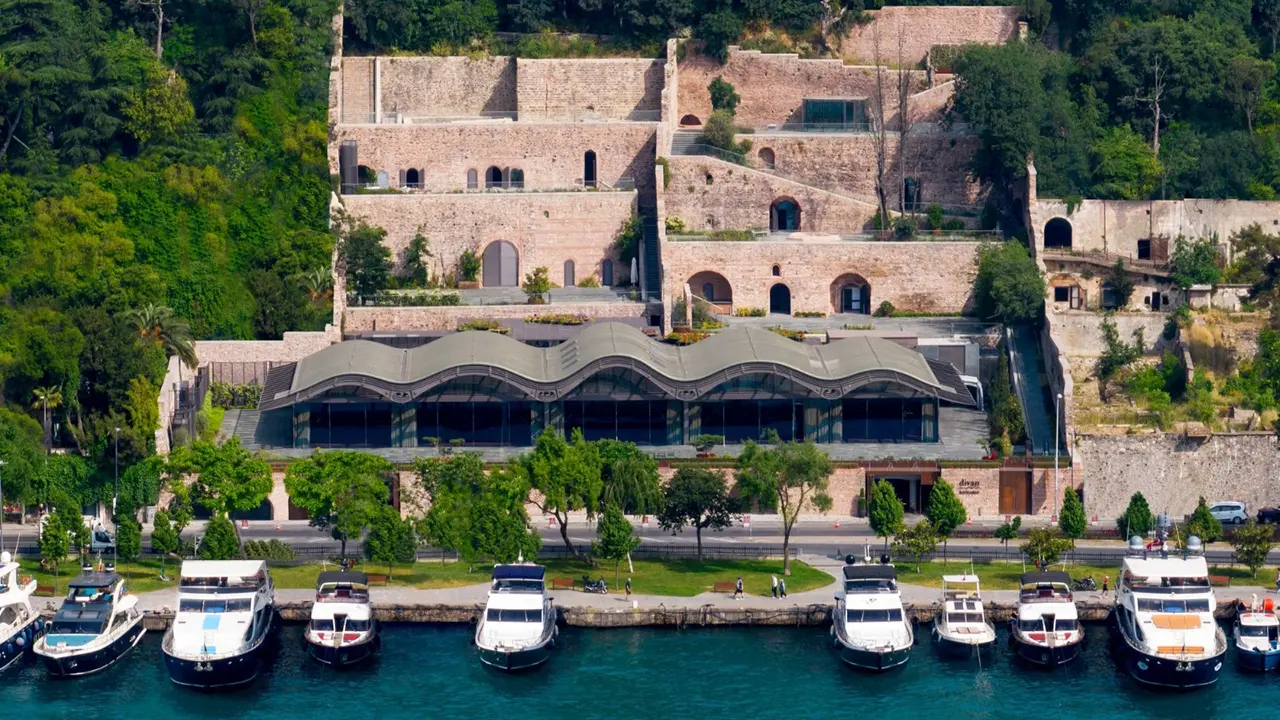
Designed with respect for the historic silhouette of Kuruçeşme along the Bosphorus, existing historic walls and trees were preserved, and the new design is integrated into the natural environment. Underground cisterns, retaining walls, and terrace gardens are maintained, and vaulted clusters were added, embracing both past and present.
Conceptualizing Context
Conceptualizing Context involves treating a situation or environment itself as the concept and interpreting it. In this approach, the architect begins by considering how the site influences and shapes the design concept, interpreting the context through broader analysis. Here, context becomes a fundamental element of the architectural concept, serving as an inspiration and a guiding tool for design. The existing environment becomes open to reimagining or redefinition, allowing the design to establish new forms of interaction with its surroundings.
In essence, while contextualizing concept focuses on adapting an idea to its surroundings, conceptualizing context starts by making the context itself the origin of the concept. Both approaches aim to integrate architecture with its environment, but their methodologies differ.
Application Areas
- Site-Specific Art Installation:
In a public art project, an architect may design an abstract installation that interacts with its environment, drawing inspiration from natural landscape features such as a nearby river’s flow or wind patterns. Here, nature itself becomes the definitive basis of the concept. - Urban Transformation:
In a redeveloping city, an architect may analyze existing transportation networks, social dynamics, and environmental factors to develop a new master plan. This plan reflects the city’s social and economic conditions while providing innovative urban spaces. Thus, the concept is directly derived from the city’s functioning and transformation. - New Tashkent City Project:
This master plan aims to bring a new vision to Tashkent’s development, aligning with the country’s long-term development goals: strengthening infrastructure, stimulating economic growth, supporting social development, and enriching ecosystem services. Sustainability principles are prioritized with design integration of energy efficiency, green spaces, ecological corridors, preservation of architectural heritage, and accessible housing. Mid-rise mixed-use buildings promote pedestrian-friendly environments, while the environmental impact of high-rise structures is minimized. Moreover, revitalization of small centers and the development of suburbs and satellite regions are encouraged—reflecting an ambitious vision for improved livability and sustainability.
Examples
- The Shard, London
Designed by Renzo Piano, The Shard’s vertical form is inspired by London’s church spires. Despite being one of Europe’s tallest buildings, it aims to connect with both the historic and contemporary cityscape. - Sydney Opera House, Australia
Designed by Jørn Utzon, its sail-like shells reflect the marine environment of Sydney Harbour—a strong example of the conceptualizing context approach. - Fallingwater, Pennsylvania
Designed by Frank Lloyd Wright, this house is built over a waterfall. The use of local materials that reflect surrounding rock formations and forest textures integrates the structure with the natural landscape. - Salk Institute for Biological Studies, California
Designed by Louis Kahn, its courtyards face the Pacific Ocean and frame the horizon, creating a dramatic effect. Simple materials like concrete highlight the site’s natural beauty. - Therme Vals, Switzerland
Designed by Peter Zumthor, this spa complex is built directly into the hillside. The extensive use of local stone allows the building to feel like a natural extension of the earth. - Parc de la Villette, Paris
Bernard Tschumi’s deconstructivist approach challenges traditional definitions of parks through red follies. The design questions the complex relationship between form and content and redefines context as an abstract concept.
Bernard Tschumi’s Theoretical Contributions:
In Event‑Cities and Architecture and Disjunction, Tschumi discusses the relationship between space, events, and movement—defining context not just as physical environment, but also through the activities and interactions occurring within. His approach posits architecture not merely as built form, but as a medium for potential experiences and events, theoretically reinforcing conceptualizing context.
Contemporary Examples: Cappadocia Projects
- GAD Cappadocia Kepez:
Situated in a unique geological and archaeological context, this project uses topography and landscape as the conceptual starting point. New structures relate to stones unearthed from the site, and thermal resources are integrated for daily use and energy production—creating original spaces shaped directly by geography. - GAD Cappadocia Spa Hotel:
Located in a stone‑quarry area, this project takes on the cultural and natural context of the region as a reclamation strategy. Archaeological remains and thermal springs are central to the design. The building blurs boundaries between natural and artificial, offering an experience that both preserves and reinterprets the context. - GAD Karlık Spa Hotel:
Near Uçhisar Castle, this project was developed as a layout that directly connects with the Cappadocian landscape. Volumes are oriented for both views and privacy. The spa retains its natural character on the basement level while the rooms provide varied spatial experiences. In this way, the context becomes a guiding design element.
Conclusion
Conceptualizing context means making the context itself the conceptual core of the design. In this approach, the environment is not just an external condition to respond to, but a direct source of inspiration that shapes the concept. As the examples show—whether it’s the sail form of the Sydney Opera House, Fallingwater’s integration with the waterfall, or projects in Cappadocia grounded in geological and cultural context—context becomes the creative force that transforms architecture.