
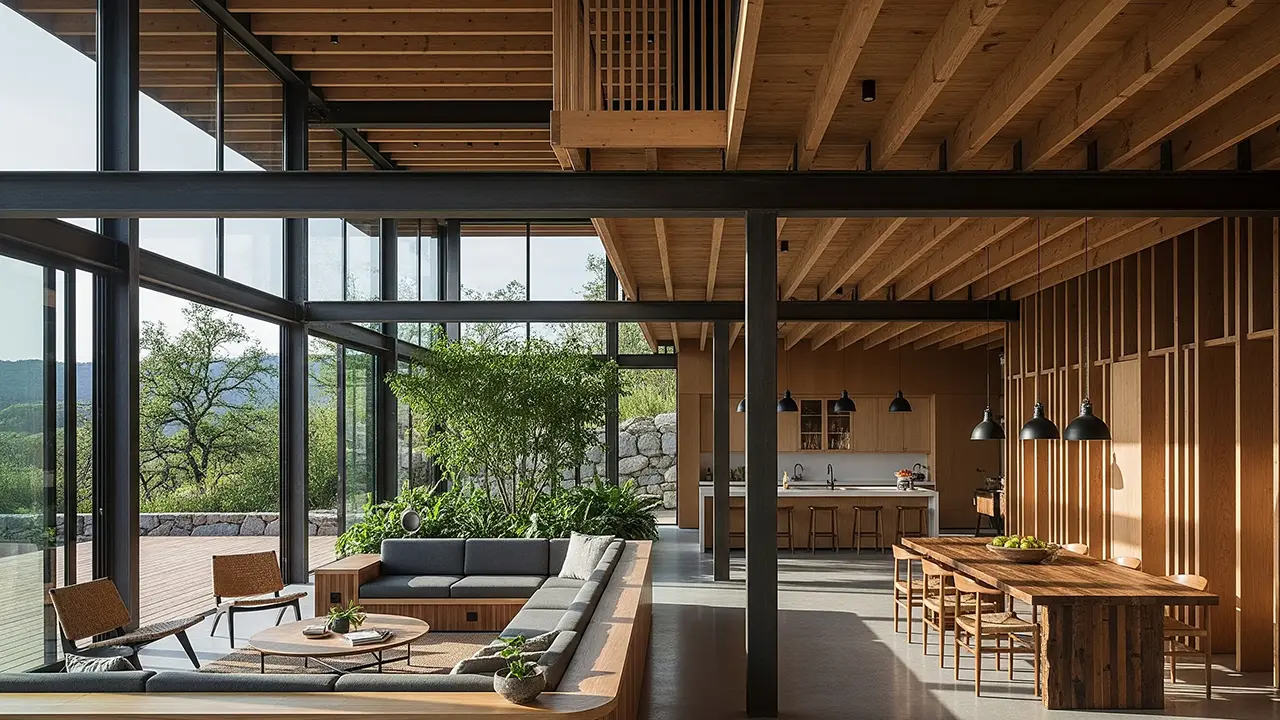
The Relationship Between Architecture and Interior Design
Architecture and interior design are two distinct yet interconnected disciplines focused on the design of buildings and spaces. While both prioritize aesthetics, functionality, and human experience, they differ significantly in their areas of specialization and scope.
Architecture
Architects are responsible for the design, planning, and supervision of buildings and physical structures. This includes both the external shell and the overall interior layout of a structure. Their responsibilities include:
Structural Integrity and Safety: Ensuring that buildings can withstand external forces such as earthquakes and wind, and remain structurally sound.
Functionality and Spatial Organization: Designing buildings for optimal use according to their purpose, and managing the flow between spaces.
Aesthetics and Environmental Harmony: Creating visually appealing and original designs that blend harmoniously with their surroundings.
Compliance with Zoning and Building Codes: Designing structures in accordance with local regulations, building codes, and standards.
Budget and Project Management: Keeping the project within budget and overseeing the construction process.
Architects typically work on a larger scale, addressing every aspect of a building from foundation to roof. Their education covers subjects such as structural systems, material science, construction technologies, and urban planning.
Interior Architecture
Interior architects focus on the design, organization, and functionality of interior spaces within buildings. Their goal is to enhance the atmosphere, aesthetics, and usability of a space. Their responsibilities include:
Space Planning and Flow: Optimizing the layout of furniture, circulation paths, and overall interior arrangements.
Material and Color Selection: Choosing appropriate materials and color palettes for walls, floors, ceilings, furniture, and accessories.
Lighting Design: Planning natural and artificial lighting to achieve the right ambiance and functionality.
Ergonomics and User Experience: Ensuring the space meets user needs and provides comfort and efficiency.
Acoustics and Sound Insulation: Managing sound quality and insulation within a space.
Custom Design Solutions: Designing unique elements such as partitions, bespoke furniture, or storage systems.
Interior architects concentrate on the human scale and the experience within a space. Their education typically includes design principles, color theory, material knowledge, furniture history, and human factors.
Architecture and interior architecture often work together. While the architect creates the overall framework and structure of a building, the interior architect handles the details within this framework to maximize quality of life and aesthetics. For instance, in a residential project, the architect designs the exterior and floor plans, while the interior architect designs the room layouts, material selections, and kitchen/bathroom interiors.
Both professions center on the user experience and aim to improve living environments. The distinction lies in the depth of specialization and scale of focus. When collaborating, they can produce structurally sound, aesthetically refined, and highly functional projects.
The Pre-Interior Architecture Era: Influence of Decorative Arts and Performing Arts on Spatial Design
Roots of Interior Arrangements Before Interior Architecture
Interior design and aesthetics date back to ancient times. However, this was not done by “interior architects” in the modern sense.
Ancient Civilizations and the Middle Ages
During these times, architects were responsible for both the exterior and interior of a structure. They oversaw everything, including murals, mosaics, sculptures, and even furniture placement. For example, Roman villa frescoes or Byzantine mosaics were inseparable from architecture itself.
Interiors were often lavishly decorated to indicate religious or social status. Artisans (carpenters, stone masons, painters, etc.) worked under the direct supervision of the architect.
Renaissance and Baroque Periods
In the Renaissance, architects were still multidisciplinary artists. Figures like Michelangelo and Brunelleschi not only designed buildings but also managed interior arrangements and the integration of artworks.
During the Baroque and Rococo eras, interiors became increasingly ornate. In France, decorators began to emerge — professionals who coordinated furniture, textiles, wall coverings, mirrors, and fireplaces for palaces and noble residences. While architects handled the overall planning, these decorators shaped the interior “atmosphere” and were often trained in the visual arts, such as set or costume design.
18th and Early 19th Century: Decorative Arts and “Home Furnishers”
Before the Industrial Revolution, interior elements were handcrafted and thus expensive, accessible only to the wealthy.
Tradespeople such as furniture makers, upholsterers, and drapers played significant roles in interior arrangements. They not only sold products but also advised clients on how to decorate their homes. These individuals represented the most basic forms of today’s interior architecture.
The decorative arts — encompassing furniture design, ceramics, glasswork, textiles, and metalwork — contributed directly to interior aesthetics, forming the core elements of a space’s atmosphere and visual richness.
Influence of the Performing Arts
Performing arts, particularly theater set and costume design, have always mastered the creation of atmosphere and storytelling through space. Set designers skillfully used color, light, form, and texture to evoke emotional responses from the audience.
This expertise gradually influenced interior design. In the 19th century, some set designers began working on the interiors of private residences or public buildings, as both fields shared the goal of creating atmosphere, telling visual stories, and impacting the user/viewer.
The Emergence of Interior Architecture as a Discipline
As noted earlier, by the late 19th and early 20th centuries, the rise of industrialization and the middle class led to increased demand for interior arrangements that went beyond the tastes of artisans or homeowners. A more systematic and professional approach became necessary. This shift marked the birth of a new discipline known as interior architecture or interior design.
Early Interior Design Education
Before the formal discipline of interior design emerged, interior space arrangements were primarily under the general responsibility of architects. However, these spaces were also shaped by the contributions of decorative arts, craftspeople, furniture makers, and sometimes even individuals inspired by the performing arts. These areas served as the initial proving ground for the principles of aesthetics, functionality, and atmosphere creation, which form the foundation of interior design.
The First Interior Design Education
The first formal and contemporary education in the discipline of interior design is generally recognized as having begun at the New York School of Applied and Fine Arts (now Parsons School of Design).
In 1904, this school started offering “interior decoration” courses. This was a significant step, elevating interior arrangement from merely a craft or hobby to an academic framework.
Pioneering figures like Elsie de Wolfe emerged during this period, leading efforts to professionalize interior decoration. Her book, “The House in Good Taste,” published in 1913, is considered one of the first important written resources in this field.
Other Significant Developments:
New York School of Interior Design (NYSID): Founded in 1916 by Sherrill Whiton as the “New York School of Interior Decoration,” it became a prominent institution in the field. Its name was later changed to the “New York School of Interior Design.”
Bauhaus School (1919, Germany): Although it didn’t have a direct “interior design” department, the Bauhaus School’s fundamental design education, emphasizing functionality and industrial production, played a crucial role in the development of modern interior design. It pioneered concepts in furniture design, lighting, and spatial arrangement.
American Institute of Decorators (AID): Established in 1931 (now the American Society of Interior Designers – ASID), this professional organization played a major role in setting standards for the interior design profession and strengthening its professional identity.
The Situation in Turkey:
The origins of interior design education in Turkey also date back quite a bit:
Turkey’s first formal interior design education began in 1929 with the opening of the Interior Decoration Workshop within the Department of Ornamentation (Tezyinat) at the Sanayi-i Nefise Mektebi (now Mimar Sinan Fine Arts University).
The first program for the contemporary interior design profession is generally considered to be the Interior Architecture department opened in 1957 at what is now Marmara University (State School of Applied Fine Arts).
First Architectural Education: Institutionalization and the Diploma Era
Architecture is more than just a building; it is the act of transferring culture to future generations, conveying messages through structures, and imbuing meaning. In this sense, Göbeklitepe, founded 12,000 years ago, is seen as one of the first architectural products, as these monumental structures go beyond simple shelter to embody humanity’s earliest shared belief systems and cultural expressions.
The transmission of architectural knowledge and the training of “architects” has spanned millennia through the master-apprentice tradition, written texts, and guilds. The “education” system in these early periods was primarily based on practical experience and professional specialization. Among these written texts, Vitruvius’s Ten Books on Architecture (De architectura), penned around 1st century BCE (approximately 30-20 BCE), stands as the oldest comprehensive source on architectural principles to reach us. With the Renaissance, architecture transcended being merely a craft to be viewed as an intellectual discipline. Significant figures like Alberti, Brunelleschi, and Palladio wrote theoretical works on architecture, integrating mathematics, geometry, and ancient architectural principles into modern design. Although formal schools did not yet exist, the methods of training apprentices in architects’ own studios and workshops evolved towards a more systematic transfer of knowledge. As architecture transitioned from a craft to an academic discipline, formal educational institutions and diplomas began to emerge from the late 17th century onwards.
The First Step: Académie Royale d’Architecture (Paris, December 3, 1671)
Established in France, the Académie Royale d’Architecture is the first significant institution that institutionalized architectural education. This academy laid the groundwork for modern architectural education by offering a systematic curriculum based on theoretical lessons, drawing, and Classical architectural principles. The academy granted titles such as “Royal Architect” or “Academician,” serving as the first official proofs of competence in the field.
19th Century: Architecture Becomes an Academic Discipline
Although institutions like the Académie d’Architecture formalized architectural education, the widespread adoption of the “diploma” concept as we understand it today, and the acceptance of architecture as an academic discipline in official universities, primarily occurred in the 19th century. During this century, architectural schools and programs spread rapidly worldwide, granting graduates diplomas equivalent to university degrees.
Some prominent architectural programs that emerged and granted diplomas during this period include:
École Spéciale d’Architecture (Paris, 1865): Founded in Paris, this private school offered an alternative to the traditional Beaux-Arts approach. It made architectural education more practical and independent, becoming one of the first private architectural schools to grant diplomas.
Massachusetts Institute of Technology (MIT) (USA, Department of Architecture 1865): This is one of the first architectural programs established in the United States. MIT brought a scientific and engineering-focused approach to architectural education, granting its graduates modern architectural diplomas. (Note: The department’s founding year is 1865, not 1868 as you provided.)
University of Illinois Urbana-Champaign (USA, Department of Architecture 1867): Another important early architectural program in the U.S. that granted diplomas. (Note: The department’s founding year is 1867, not 1913 as you provided.) This school played a role in the expansion of architectural education in the U.S.
Sir J. J. College of Architecture (Mumbai, 1913): One of India’s oldest architectural schools. Its establishment at the beginning of the 20th century is a significant example of the spread of Western architectural education models to Asia and the training of professional architects in these regions.
Bauhaus (1919–1933): Established in Germany, this school offered a revolutionary educational model that integrated art, craft, and technology. Although short-lived, it laid the foundations of Modern Architecture and profoundly influenced architectural education worldwide. Bauhaus provided students not only theoretical knowledge but also practical skills through workshops, granting its graduates diplomas representing the new generation’s understanding of architecture.
These institutions made architectural education more accessible and, by granting official diplomas, strengthened the professional identity of the architectural profession and laid the groundwork for future architectural education.
The Beginning of the Architect vs. Interior Designer Distinction
It’s challenging to pinpoint an exact date for when the distinction between architecture and interior design began, as it’s the result of an evolutionary process. While architecture has existed as a profession since ancient times, interior design emerged as an independent discipline in the modern sense in the late 19th century and became institutionalized in the early 20th century. Innovations brought by the Industrial Revolution, the economic power and aesthetic expectations of the middle class formed the basis of this distinction. The understanding that both the exterior shell of buildings and their interior living spaces required separate expertise became widespread.
This separation allowed both professions to specialize and offer more tailored solutions within their respective fields.
Historical Process and the Emergence of the Distinction
From Ancient Times to the Middle Ages: In ancient Egyptian, Greek, and Roman civilizations, during the Middle Ages, and the Renaissance, the architect was responsible for both the exterior structure of the building and the arrangement of its interior. Many great architects personally handled details like furniture, decoration, and even garden design while designing structures. The functionality, aesthetics, and even the design of objects within the space came from a single hand. During this period, there was no separate title like “interior architect” or “interior decorator.”
17th and 18th Centuries: The Rise of Decoration: With the popularization of styles like Baroque and Rococo, the detail and ornamentation in interiors became increasingly complex. During this period, artisans, painters, sculptors, and furniture makers began to play more prominent roles in decorating interiors. However, these individuals typically still worked under the architect’s overall vision. Housewives, upholsterers, or artisans might offer advice on interior arrangements.
19th Century: The Industrial Revolution and the Rise of the Middle Class:
Industrial Revolution (approx. 1760-1840): The mass production of furniture and other design materials became possible. This lowered the cost of materials and increased their variety, making the concept of interior “decoration” more accessible. New building materials like steel and concrete also broadened architects’ possibilities, shifting their focus towards structural and technical complexities.
Development of the Middle Class: With increasing urban wealth and the expansion of the middle class (bourgeoisie), there was a growing desire to make homes and living spaces more aesthetic and comfortable, reflecting personal taste and social status. This demand increased the need for interior-focused expertise.
Emergence of the “Interior Decoration” Concept: In the early 19th century, particularly in France, the concept of “interior decoration” became distinct. Vendors of furniture and finishing materials began offering consulting services on home decoration. Edith Wharton and Ogden Codman Jr.’s “The Decoration of Houses,” published in 1897, defined interior decoration as an area concerned with
surface treatments, laying the groundwork for the modern understanding of interior design.
Early 20th Century: Interior Design as an Independent Discipline:
Professional Institutionalization: In the early 20th century, particularly in the United States, interior design began to be institutionalized in both industry and education.
Elsie de Wolfe (1905): A pioneer of modern interior design, Elsie de Wolfe took her first interior decoration “commission” in 1905 and published “The House in Good Taste” in 1913. This was a significant step in the interior design profession gaining a professional identity.
“Interior Designer” Term: In the 1930s, the term “interior designer” began to be used by a magazine titled “Interior Design and Decoration.”
Educational Institutions and Standards: Between the 1920s and 1930s, schools offering interior design education and organizations setting professional standards emerged. For example, modernist approaches like the Bauhaus School (founded in 1919) in Germany contributed significantly to the development of interior designs that integrated functionality and aesthetics.
Post-World War II: From the 1950s onwards, particularly in Western countries, with increasing prosperity, interior design became even more popular and was recognized as a professional discipline.
Socio-Economic Reasons for the Architect and Interior Designer Distinction
1. Industrial Revolution and Changes in Production (Late 18th – 19th Century)
The Industrial Revolution brought revolutionary changes to architecture and interior design:
Mass Production and Material Diversity: Furniture, textiles, glass, and other building materials previously produced by handcrafts could now be mass-produced in factories. This reduced material costs and increased variety. Architects could now choose from an existing product range instead of designing or commissioning every interior detail themselves, making interior “decoration” more accessible.
Changes in Construction Methods: New building materials like steel and concrete offered architects the ability to create larger spans and different forms previously impossible. This increased the complexity of building structures and exteriors, requiring architects to focus more on these structural and technical details.
2. Rise of the Bourgeoisie and Lifestyle Changes (19th Century)
Economic Prosperity and Consumer Culture: The growing middle and upper-middle class (bourgeoisie) not only gained economic power but also sought to express their social status through the design of their homes. They now demanded not just functional shelters, but comfortable and aesthetically pleasing spaces that reflected personal tastes, social status, and cultural accumulation.
Demand for Specialization: The desire for individuals to personalize their homes and furnish them “to their own taste” increased. This demand led to the need for specialists who focused on the fine details of interiors, beyond the architect’s general building design. It became time-consuming and often insufficient for the traditional architect to handle all these details alone, given changing aesthetic expectations.
Leisure and Entertainment Culture: With increased leisure time for the middle class, homes ceased to be merely places for sleeping and eating. Specialized functional spaces like living rooms, libraries, and guest rooms emerged, each requiring its own unique ambiance and arrangement.
3. Evolution and Specialization of the Architectural Profession (Late 19th – Early 20th Century)
Development of Engineering and Building Sciences: The 19th century saw significant advancements in engineering disciplines, particularly in statics, mechanics, and hydraulics. Architects increasingly needed more complex engineering knowledge regarding building safety, durability, and technological infrastructure. This led architects to shift their focus to structural integrity, building structure, and exterior appearance.
Urbanism and Urban Planning: During the same period, with the rapid growth of cities, larger-scale issues like urbanism and urban planning entered the architectural agenda. This encouraged architects to focus on the urban fabric, infrastructure, and overall planning rather than the interior details of individual buildings.
Artistic and Technical Separation: While architecture came to be seen more as a discipline combining artistic vision with technical knowledge, interior design began to be more associated with decorative arts and aesthetic applications. This laid the groundwork for the development of separate specializations in both fields.
4. Role of Educational Institutions (Early 20th Century)
Separate Educational Programs: In the early 20th century, particularly in the United States, “interior decoration” or “interior design” schools and programs began to be established. This led to the recognition of interior design as a distinct academic discipline. For example, the New York School of Interior Decoration was founded in 1904.
Formation of Professional Organizations: While architectural organizations like the American Institute of Architects (AIA) already existed, interior designers also formed their own professional associations. For example, the American Institute of Decorators (now ASID – American Society of Interior Designers) was founded in 1931. These organizations helped set professional standards, oversee educational quality, and secure the legal authority of interior designers.
As a result of these developments, the roles of architect and interior designer began to clarify:
Architect: Positioned as the person who designs the building’s shell, structure, overall plan, exterior appearance, and its relationship with the environment. Their primary responsibility is to ensure the building is safe, functional, and compliant with regulations.
Interior Designer: Emerged as the person who focuses on the human experience within the building, designing the atmosphere, aesthetics, functionality, material selections, furniture arrangement, and lighting of spaces. Their primary responsibility is to ensure the space is comfortable, aesthetically pleasing, and efficient for its users’ needs.
Today, this distinction largely remains valid, but new approaches like sustainability, smart building technologies, and user-centered design require even closer collaboration between architects and interior designers. Both work on different, yet complementary, parts of the same project.
Architectural and Interior Design Approaches in Different Countries: Similarities and Differences
Approaches to architecture and interior design, along with professional practices, can vary significantly from country to country, and even within regions of the same country. These differences are often influenced by numerous factors such as cultural heritage, climatic conditions, economic status, legal regulations, education systems, and technological development levels. However, globalization and digitalization are also leading to some similarities.
Here are the main headings for differences and similarities:
Differences
Cultural and Historical Heritage:
Traditional Architecture and Interiors: Designs in Japan reflect a minimalist aesthetic integrated with nature; Mediterranean countries showcase the use of stone and wood, courtyards, and an indoor-outdoor living concept; the Middle East features geometric patterns, rich colors, and structures emphasizing privacy. Each geography reflects its unique cultural codes, which architects and interior designers incorporate into their designs.
Symbolism and Meaning: In some cultures, specific colors, patterns, or forms carry special meanings. For example, philosophies like Chinese Feng Shui or Indian Vastu Shastra emphasize the flow of energy and balance in spatial arrangement, requiring a design approach deeply intertwined with these philosophies.
Climatic Conditions and Material Usage:
Adaptation: In hot climates (e.g., Middle East, Mediterranean), thick walls, small windows, courtyards, and shaded areas are common, while in cold climates (e.g.,
Northern Europe, Russia), good insulation, large windows to maximize sunlight, and energy-efficient systems are prioritized.
Local Materials: Different materials (stone, wood, adobe, bamboo, etc.) are used depending on each region’s natural resources and traditional construction techniques. This influences design aesthetics and sustainability approaches.
Education Systems and Professional Competencies:
Duration and Focus of Education: Architectural education can last 4 years in some countries (e.g., some universities in Turkey, undergraduate programs in the USA), while in some European countries it may be 5 years or longer (integrated bachelor’s + master’s programs). There are also differences in the duration and curriculum of interior design education. In some countries, interior design focuses more on artistic and decorative aspects, while in others, structural modifications and technical details are also a significant part of the curriculum (interior architecture/interior design).
Licensing and Certification: The licensing and certification processes required to practice architecture and interior design vary by country. In some countries (e.g., certain US states), interior designers may require a comprehensive exam and experience period to have “signing authority” for certain projects, while elsewhere, rules may not be as strict. In Turkey, there are professional chambers and legal authorities for interior design.
Internship and Experience Requirements: The duration of internships and professional experience required to register with professional chambers or obtain a license varies.
Legal Regulations and Building Codes:
Building Laws and Standards: Building regulations concerning seismic resistance, fire safety, accessibility for the disabled, and energy efficiency vary significantly between countries. This directly impacts architectural and interior design.
Professional Scopes of Practice: The extent to which an architect and interior designer are responsible for different stages of a project, and which drawings or calculations they can perform, is determined by law. This distinction may be sharper in some countries, while more flexible in others.
Economic Conditions and Market Dynamics:
Budget and Concept of Luxury: In developed economies, design budgets may generally be higher, allowing for more experimental and high-end material use. In developing countries, more cost-effective and functional solutions may take precedence.
Residential and Commercial Sectors: The intensity of different project types such as residential, office, hotel, or retail may vary depending on the country’s economic structure. This also affects the specialization areas of design firms.
Similarities
Fundamental Design Principles:
Functionality and Aesthetics: Globally, both architecture and interior design aim to combine a space’s functionality (purpose, circulation, ergonomics) with aesthetics (visual appeal, atmosphere, balance).
Human-Centricity: Both disciplines ultimately focus on improving the human experience. The primary goal is for the space to serve the needs, comfort, and well-being of its users.
Light, Color, Texture: Universal design elements such as light (natural and artificial), color, texture, form, and spatial arrangement form the basis of designs across all cultures and geographies.
International Interaction and Globalization:
Architectural Movements: Global architectural movements like Modernism, Postmodernism, and Brutalism have led to the spread of similar aesthetic and philosophical approaches worldwide.
Role of Technology: Design and visualization technologies such as CAD (Computer-Aided Design), BIM (Building Information Modeling), and virtual reality (VR) are widely used by architecture and interior design firms globally. These technologies facilitate collaboration and enable the execution of international projects.
Sustainability Focus: With climate change and environmental awareness, sustainable design and green building certifications (LEED, BREEAM, etc.) have begun to become a global standard. This leads designers in different countries to pursue similar environmental goals.
International Firms and Education: Large architecture and interior design firms operate globally. Additionally, international student exchange programs and joint degrees help different educational systems converge.
Problem Solving and Creativity:
Both professions require the ability to produce creative and innovative solutions within defined constraints (budget, time, space, regulations). This problem-solving approach is similar across all countries.
Client Relations and Project Management:
From project inception to completion, core project management processes such as client communication, project planning, budget management, and supplier and contractor coordination are common elements in practices across different countries.
While globalization brings standardization and technological convergence to architecture and interior design, each country’s unique cultural, climatic, and legal dynamics ensure that professional practices and design approaches maintain their distinct differences. This, in fact, enriches and diversifies these disciplines.
The Term “İç Mimar” (Interior Architect) in Turkey: A Unique Identity, Globally Differentiated Meanings
The widespread use of the term “iç mimar” in Turkey, while globally professionals are more commonly referred to as “interior designer” or, in some cases, “interior architect,” stems from fascinating reasons closely tied to the evolution of the profession.
Global Common Usage: “Interior Designer” and “Interior Architect”
“Interior Designer”: This is the most globally common term used to describe professionals who focus on the functional and aesthetic aspects of interior spaces. Interior designers typically deal with:
Space Planning: Furniture placement, circulation areas.
Aesthetics and Atmosphere: Color palettes, lighting, material and texture selection.
Furniture and Accessory Selection: Choosing existing furnishings or developing custom-designed pieces.
User Experience: Shaping spaces based on ergonomics, psychology, and user needs.
The “Interior Designer” title generally does not imply direct authority to intervene in a building’s structural integrity. It primarily focuses on enhancing the experience and aesthetics “within the space.”
“Interior Architect”: While less common, this term is used, particularly in Europe (e.g., Germany, Netherlands) and some other countries. The title “Interior Architect” describes professionals who, unlike interior designers, have more authority to intervene in the structural elements of a building’s interior, its mechanical systems, and even the placement of non-load-bearing walls. Individuals holding this title typically have an education close to architecture or have received additional training in that field, possessing higher technical knowledge. They deal not only with decorative elements but also with interventions related to the building’s structure. For example, they may be competent in matters like removing a wall or creating a new window opening (naturally, under the supervision and approval of an architect or structural engineer).
The Term “İç Mimar” in Turkey and Its Reasons
The widespread use of the term “iç mimar” in Turkey and its differentiation from global usage stems from several key reasons:
Influence of the Education System:
The departments established in Turkish universities are directly named “İç Mimarlık” (Interior Architecture). The curriculum of these departments goes
beyond merely focusing on “decoration” or “design” to include courses on structural knowledge, material science, construction techniques, and understanding the structural potential of a space. Graduates are trained to deal not only with surface finishes but also with the overall spatial organization and fine structural details within the interior.
This education system grants graduates the title “iç mimar,” positioning them as a bridge between “architect” and “designer.” This emphasizes their competence in handling not just aesthetics but also the functionality and structural arrangements of space.
Legal Definition and Professional Chamber:
Professional organizations in Turkey, such as the Chamber of Interior Architects (İç Mimarlar Odası), strive to define the “iç mimar” title and its scope of authority through legislation. This formalizes the definition and scope of the profession.
While in some countries the concept of a specific “chamber” or “signing authority” for interior designers may not be as strong as in Turkey, the signature of an “iç mimar” has gained importance in Turkey for the formalization and supervision of interior design projects. This solidifies the professional status of the “iç mimar” term.
Linguistic Approach and Semantic Framework:
In Turkish, the word “mimar” comes from the root “imar etmek” (to construct, to develop). “İç mimar” (interior architect) adds the prefix “iç” (interior), signifying a person who “constructs the interior” of a building, meaning they create and organize its interior space. This linguistic structure emphasizes that the profession is not merely a superficial decorative activity but rather involves the internal construction and organization of space.
While “designer” (tasarımcı) has a more general meaning in Turkish, the addition of “mimar” (architect) to form “iç mimar” directly associates the professional with construction and space-creation processes.
Historical Development and Specialization:
As previously discussed, the discipline of interior design evolved separately from architecture. In Turkey, during this differentiation process, it was deemed important to emphasize not only the “decoration” but also the “architectural” dimension of interior spaces. Consequently, the term “iç mimar” has come to signify a more comprehensive and technical competence compared to “iç tasarımcı” (interior designer).
In conclusion, the term “iç mimar” stands out as a unique professional title in Turkey. The main reason for this is Turkey’s education system and professional definitions, which emphasize that the interior architect is concerned not only with aesthetics but also with the structural and functional arrangements of a building’s interior. Globally, “interior designer” focuses more on aesthetics and user experience, while the term “interior architect” might bear a meaning closer to “iç mimar” in Turkey, though the prevalence of this title varies from country to country.
These differences directly affect professional authorities, educational standards, and even public perception within the industry.
Interdisciplinary Convergence with Artificial Intelligence: Expanding the Scope of a Single Professional
In the future, with the contributions of artificial intelligence (AI) to the disciplines of architecture and interior design, it is quite likely that these two professions could become more integrated rather than further separated. It’s even plausible that a single professional might gain competence across a broader spectrum. However, the phrase “can be done by a single person” doesn’t mean robots will completely replace human architects or interior designers; rather, it suggests that human professionals will extend their tools and capabilities with AI.
AI’s Contributions to Architecture and Interior Design
AI, especially generative AI, has already begun to revolutionize these fields, and its future impacts will be much greater:
Rapid and Efficient Design Generation:
Algorithmic Design: AI algorithms can generate thousands of different design variations in seconds, given specific parameters (space, budget, sunlight, wind direction, material cost, aesthetic preferences, etc.). This can encompass both the overall massing and facade design of a building, as well as interior layout plans.
Optimization: AI can optimize designs based on specific goals such as energy efficiency, material usage, structural integrity, or user flow. This could enable an architect to consider structural and external calculations while simultaneously accounting for an interior designer’s ergonomic and aesthetic arrangements.
Data Analysis and Predictive Capability:
User Behavior: AI can analyze large datasets (e.g., users’ movement patterns in a space, how much time they spend in certain areas, preferred temperature or light levels) to provide insights that better meet human needs in future designs. This informs both the architect’s overall planning and the interior designer’s detailed design.
Trend Analysis: AI can analyze global design trends, material innovations, and market demands, helping designers make informed decisions.
Automated Documentation and Modeling:
BIM (Building Information Modeling) Integration: AI-powered BIM tools can automatically integrate data throughout a building’s entire lifecycle (design, construction, operation). As an architect designs the facade, AI can simultaneously model the interior lighting, plumbing, and furniture placement, detecting clashes.
Rendering and Visualization: Realistic visualizations, virtual reality (VR), and augmented reality (AR) experiences can be produced much faster and more easily with AI. This offers clients the opportunity to experience both the exterior and interior of a building in detail.
Sustainability and Performance-Driven Design:
AI can propose solutions to minimize a building’s environmental impact, optimize energy consumption, and promote the use of sustainable materials. This applies to both architectural and interior contexts.
Decreasing Separation and a New Professional Profile
Given the contributions above, AI could potentially integrate the two disciplines in the following ways:
Holistic Design Process: AI will allow the architect to design the exterior shell and structure while simultaneously optimizing interior details and functionality. This will make “outside-in” and “inside-out” design approaches more integrated.
“Design Orchestrator” Role: Future professionals might assume a role of “Design Orchestrator,” using AI tools to simultaneously address both macro-scale architectural problems and micro-scale interior details. This person would select the most suitable options from thousands of variations generated by AI, blending them with human-centric aesthetic and functional criteria.
Less Routine, More Creativity: With AI taking over routine, repetitive, and calculation-based tasks, human designers can focus more on conceptual thinking, creative problem-solving, and designs centered on emotion and experience.
New Specializations: This convergence could lead to the emergence of new hybrid specializations, such as “smart building integration specialist” or “human-space experience designer.”
Complete Merger or Deepened Collaboration?
It’s unlikely that a single “human” could manually perform all these processes. However, thanks to the powerful tools provided by AI, an architect or interior designer will be able to perform tasks that previously fell into separate areas of expertise, either independently or with significantly less external support. This will blur the boundaries between disciplines and elevate collaboration to a deeper, more integrated level.
In conclusion, rather than the complete disappearance of the distinction between architecture and interior design with the development of AI, we can say that these two fields will evolve towards a more integrated, efficient, and human-centric design. The role of the human professional will be to skillfully use AI, guiding the vision, creativity, and ethical values to bring it to life.
How the Roles of Architecture and Interior Design Will Change with the Impact of Artificial Intelligence
Artificial intelligence (AI), coupled with global trends like sustainability, flexible spaces, and human-centered design, will fundamentally transform the roles of architecture and interior design professions. This change will affect how designers work, the tools they use, and their approach to projects.
A More Strategic and Holistic Perspective
In the future, designers will largely be freed from routine and repetitive tasks. AI-powered tools will be able to automatically generate a significant portion of drawings, quantity take-offs, code compliance checks, and even initial design variations. This will allow architects and interior designers to dedicate more of their time to project concept, strategy, complex problem-solving, and innovation.
Thanks to the integration of BIM (Building Information Modeling) and AI, all elements of a building, from its exterior shell to the smallest interior detail, can be designed simultaneously and integrally. This will further blur interdisciplinary boundaries, strengthening a “holistic design” approach. Designers will no longer just focus on their specific areas but will need to develop a vision encompassing the entire project.
New Frontiers in Creativity and Collaboration with AI
While AI can generate an incredible number of design variations, the designer’s role will be to select the most suitable ones from these variations, refine them, and blend them with the project’s vision. Designers will act as “curators and directors,” shaping the “raw” ideas produced by AI. This will bring new dimensions to design by enabling complex geometries, optimized structures, or sustainable material uses that the human mind alone might not achieve.
Through digital fabrication and new material technologies, designers will be able to create more creative and personalized products or building components, moving beyond traditional production constraints. This will allow them to be actors who not only use existing products but also develop new products and production processes.
New Specializations and Continuous Learning
In the future, new hybrid roles will emerge, such as “space psychology specialist,” “smart building integration consultant,” “sustainability strategist,” or “user experience architect.” This will require designers to have foundational knowledge not only in their own fields but also in different disciplines like data science, psychology, engineering, and technology.
The ability to continuously learn and adapt will be critical to keep pace with the rapid technological advancements. Designers will need to effectively use AI tools, BIM software, and other new technologies. Furthermore, the ability to critically evaluate AI-generated results and make the most informed decisions, considering human and ethical dimensions, will become even more valuable.
Increased Ethical and Social Responsibility
With trends toward sustainability and human-centered design, designers’ responsibilities toward society and the environment will increase. Projects will need to be more accountable not only for their aesthetic and functional aspects but also for their environmental and social impacts. Ethical issues such as AI’s data usage and algorithmic bias will also come to designers’ agendas. Concepts like inclusivity, accessibility, and contribution to societal well-being will become an integral part of the design process.
Ultimately, the role of architects and interior designers will transform from “drafters” or “space decorators” into strategic thinkers and orchestrators who use AI capabilities to solve complex problems, optimize human experience, and create sustainable and flexible spaces. The human touch, creativity, empathy, and ethical judgment will remain the most valuable qualities that AI can never replace.
Opportunities AI Presents for Both Disciplines
Focus on Higher Value-Added Work: Designers will be able to dedicate more time to strategic thinking, conceptual design, client relationships, and generating innovative solutions by offloading routine and repetitive tasks to AI. This will enhance the intellectual and creative depth of the profession.
Increased Efficiency and Accuracy: AI-powered tools will enable much faster and more accurate design creation. This will allow projects to be completed in shorter times with reduced error margins.
Innovative Solutions to Complex Problems: Thanks to AI’s advanced data analysis and optimization capabilities, groundbreaking solutions that are optimized at a level unattainable by the human mind alone can be developed in areas such as energy efficiency, sustainability, material performance, or spatial flow.
Better User Experience: AI’s in-depth analyses of user behaviors and preferences will allow designers to genuinely shape spaces according to user needs. This will lead to the creation of more comfortable, functional, and psychologically positive spaces.
New Job Areas and Specializations: Interdisciplinary approaches and technology integration will open doors to new and exciting career paths such as “smart building integration,” “sustainable material consulting,” or “neuro-design specialization.”
Challenges AI Presents for Both Disciplines
Adaptation and Need for Continuous Learning: Designers will need to rapidly adapt to these new tools and methods, continuously learn new technologies, and update their existing skills. This may require a learning curve and investment, especially for existing professionals.
Transformation in the Job Market: The automation of some routine design tasks may reduce the demand for labor in certain positions. This will require designers to shift their competencies to higher value-added areas or pursue new specializations.
Ethical and Responsibility Issues: As AI becomes more integrated into design processes, ethical questions regarding data privacy, algorithmic bias, and the accountability for AI-generated designs will arise. Designers will need to understand and manage these ethical dilemmas.
Preservation of the Human Touch: There’s concern that excessive automation and algorithmic design could lead to a loss of the emotional depth, cultural context, and human scale of spaces. The designer’s role will be to use technology as a tool to preserve and enhance the human and artistic aspects.
Cost and Accessibility: The cost of accessing new technologies and software may pose a challenge, especially for smaller firms or independent designers. This could affect the balance of competition within the industry.
In general, these changes can be considered inevitable and transformative. Instead of passively awaiting changes, designers will need to be proactive professionals who actively embrace these technologies, develop creative and strategic approaches, and consider their ethical responsibilities. This will make the future of the profession more exciting and impactful.